100+ Google DeepMind Employees Draw Red Lines on Military AI — Will Google Listen This Time?
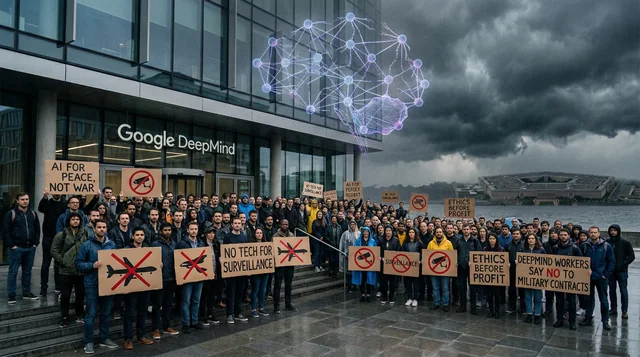
More than 100 Google DeepMind and AI employees have sent a letter to Jeff Dean, Google's chief scientist, urging him to block U.S. military deals that would use Gemini AI for mass surveillance of Americans or autonomous weapons without human oversight, The New York Times reports.
The Letter
"Please do everything in your power to stop any deal which crosses these basic red lines," the employees wrote. "We love working at Google and want to be proud of our work."
The letter comes amid a high-stakes standoff between the Pentagon and AI companies. The Defense Department, which has a $200 million contract with Anthropic, has been pressing to use AI models with fewer restrictions. Anthropic has resisted, insisting on assurances against mass surveillance and fully autonomous weapons.
The Anthropic Effect
The Google employees' letter echoes Anthropic's position and illustrates how the Pentagon's aggressive negotiating tactics may be backfiring. Nearly 50 OpenAI employees and 175 Google employees also published a separate public letter criticizing the Pentagon's approach, warning: "They're trying to divide each company with fear that the other will give in."
Jeff Dean himself has expressed solidarity with Anthropic's stance, posting on social media that "mass surveillance violates the Fourth Amendment and has a chilling effect on freedom of expression."
History Repeating
This isn't Google's first employee revolt over military contracts. In 2018, Project Maven — a Pentagon drone imagery analysis program — sparked a massive employee uprising that led Google to discontinue the contract entirely. Since then, Google has centralized its military contract decision-making process, but has also rolled back some AI safety procedures as it races to compete with OpenAI and Anthropic.
Notably, a footnote in the letter revealed that many signers actually opposed "warrantless surveillance of any citizens of the world," but deliberately narrowed their demands to Americans only "to increase the probability of achieving our request." Even in protest, they're being strategic.
The Bigger Question
The real tension here is existential for the AI industry: these companies are building the most powerful technology in human history, and the world's most powerful military wants unrestricted access to it. The employees drawing red lines today may be the last line of defense between AI capabilities and unchecked military deployment.
Whether Google listens this time — or simply fires the dissenters and signs the deal anyway — will say everything about where Silicon Valley's conscience actually stands in 2026.