10 Ways AI is Quietly Transforming Your Everyday Life in 2025
10 Ways AI is Quietly Transforming Your Everyday Life in 2025
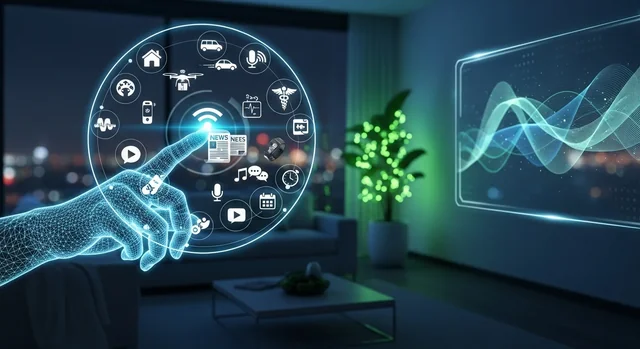
Artificial Intelligence (AI) has rapidly evolved from a futuristic concept to an indispensable component of our daily routines. In 2025, AI is no longer confined to research labs and tech giants; it's seamlessly integrated into the devices, systems, and processes that shape our lives. This article explores ten impactful ways AI is subtly yet powerfully influencing our routines, often operating behind the scenes without explicit user awareness.
The Pervasiveness of AI in 2025
While some AI applications are readily apparent, such as voice assistants and self-driving cars, many operate discreetly, optimizing, predicting, and personalizing experiences with minimal fanfare. This behind-the-scenes integration is what makes AI so transformative in 2025. Let's delve into specific examples.
1. Revolutionizing Healthcare with AI-Powered Personalized Health Monitoring
In 2025, wearable devices have transcended basic step tracking. Smartwatches, fitness bands, and even smart rings now leverage sophisticated AI algorithms to monitor vital signs, detect anomalies, and provide personalized health recommendations. The Apple Watch Series 11, priced at $499, now features advanced AI-driven heart health monitoring capable of detecting subtle arrhythmias and predicting potential cardiac events weeks in advance. Similarly, the Fitbit Sense 4 ($329) utilizes AI to analyze sleep patterns, stress levels, and activity data, offering tailored insights to improve overall well-being.
Related: AI Disney+ Overhaul: Why User-Generated Content Is the Future of Entertainment.
Startups like BioBeats are pushing the boundaries of personalized health. Their Moodmetric ring (subscription-based, starting at $29/month) uses AI to analyze electrodermal activity (EDA) and provide real-time feedback on stress levels, helping users manage anxiety and improve emotional regulation.
Expert Insight: Dr. Anya Sharma, a leading AI researcher at Stanford University, emphasizes, "The paradigm shift in 2025 is proactive healthcare. We're moving beyond reactive treatment to predictive prevention, using AI to identify risks and intervene early."
2. Breaking Down Language Barriers with Seamless Real-Time Translation
Language barriers are increasingly becoming a relic of the past. AI-powered translation tools, such as Google Translate's enhanced live transcription and DeepL's real-time speech interpretation, offer remarkable accuracy and fluency. Google Pixel Buds Pro (2nd Gen, $249) now integrate real-time translation directly into the earbuds, allowing for seamless conversations with individuals speaking different languages.
The key advancement lies in contextual understanding. In 2025, AI translators can interpret tone, idioms, and cultural nuances, ensuring accurate and culturally sensitive communication. For example, Microsoft Translator's AI can now accurately translate legal documents, preserving the precise meaning and intent of the original text.
3. Transforming the Smart Home with Intelligent Automation
Smart homes in 2025 are no longer just connected; they're intelligent. AI algorithms learn user preferences and automate tasks to optimize comfort, convenience, and energy efficiency. Amazon's Echo Hub ($179) acts as a central AI hub, controlling lighting, temperature, security systems, and appliances based on learned routines and real-time conditions. The Nest Learning Thermostat (4th Gen, $249) uses AI to optimize energy consumption, learning user schedules and adjusting temperatures accordingly, resulting in significant energy savings.
AI-powered security systems, such as Ring Always Home Cam ($299 plus subscription), can autonomously patrol homes, detecting anomalies and alerting homeowners to potential threats. Furthermore, smart appliances like the Samsung Bespoke AI Oven ($1299) can recognize ingredients and automatically adjust cooking settings for optimal results.
4. Revolutionizing Transportation with AI-Powered Navigation and Autonomous Driving
AI is revolutionizing transportation, making it safer, more efficient, and more convenient. Advanced driver-assistance systems (ADAS) are becoming increasingly sophisticated, with features like adaptive cruise control, lane-keeping assist, and automatic emergency braking powered by AI algorithms. Tesla's Autopilot system (optional feature, $12,000) continues to evolve, offering enhanced autonomous driving capabilities on highways and city streets. While fully autonomous vehicles are not yet ubiquitous, Waymo's robotaxi service is expanding to more cities, providing a glimpse into the future of transportation.
AI is also optimizing traffic flow and reducing congestion. Google Maps uses AI to predict traffic patterns and suggest optimal routes, minimizing travel time. Smart traffic management systems, deployed in cities like Singapore and London, use AI to dynamically adjust traffic signals based on real-time conditions, improving traffic flow and reducing emissions.
5. Enhancing Education with Personalized Learning Experiences
AI is transforming education by personalizing learning experiences and providing students with tailored support. Platforms like Khan Academy use AI to assess student understanding and provide personalized exercises and feedback. Duolingo leverages AI to adapt language lessons to individual learning styles and paces. These personalized learning experiences can help students master concepts more effectively and achieve better academic outcomes.
See also: AI in Education: What Italy’s Bold Adoption of Gemini Means for the Future.
AI-powered tutoring systems are also becoming increasingly sophisticated. Platforms like Wolfram Alpha offer AI-driven tutoring in STEM subjects, providing students with step-by-step solutions and personalized guidance. These systems can help students overcome learning challenges and develop a deeper understanding of complex concepts.
6. Streamlining Customer Service with AI-Powered Chatbots
AI-powered chatbots are revolutionizing customer service, providing instant and personalized support to customers around the clock. Companies like Salesforce and Zendesk offer AI-powered chatbot platforms that can handle a wide range of customer inquiries, from answering frequently asked questions to resolving complex issues. These chatbots can free up human agents to focus on more complex tasks, improving customer satisfaction and reducing operational costs.
The key to successful chatbot implementation is natural language processing (NLP). Advanced NLP algorithms enable chatbots to understand and respond to customer inquiries in a natural and conversational manner. Furthermore, AI-powered sentiment analysis allows chatbots to detect customer emotions and tailor their responses accordingly.
7. Optimizing Financial Management with AI-Driven Insights
AI is transforming financial management by providing individuals and businesses with data-driven insights and personalized recommendations. Personal finance apps like Mint and YNAB (You Need a Budget) use AI to analyze spending patterns and provide users with personalized budgeting advice. Robo-advisors like Betterment and Wealthfront use AI to manage investments, creating diversified portfolios based on individual risk tolerance and financial goals.
AI is also being used to detect fraud and prevent financial crimes. Banks and credit card companies use AI algorithms to identify suspicious transactions and prevent fraudulent activity. These AI-powered fraud detection systems can save consumers and businesses billions of dollars each year.
8. Enhancing Entertainment with AI-Generated Content
AI is increasingly being used to generate entertainment content, from music and art to movies and games. AI-powered music composition tools like Amper Music can generate original music in a variety of styles. AI-powered image generators like DALL-E 3 and Midjourney can create stunning visuals from text prompts. These AI tools are empowering artists and creators to explore new creative possibilities.
Related: AI Glasses Revolution: How Alibaba’s Qwen-Powered Wearable Is Changing the Future of Smart Tech.
AI is also being used to personalize entertainment experiences. Streaming services like Netflix and Spotify use AI to recommend movies, TV shows, and music based on individual viewing and listening habits. These personalized recommendations can help users discover new content that they are likely to enjoy.
9. Improving Agriculture with AI-Powered Precision Farming
AI is transforming agriculture by enabling precision farming techniques that optimize crop yields and reduce environmental impact. AI-powered drones and sensors can monitor crop health, soil conditions, and weather patterns, providing farmers with real-time data. This data can be used to optimize irrigation, fertilization, and pest control, resulting in higher yields and reduced resource consumption.
AI is also being used to develop new crop varieties that are more resistant to pests and diseases. Companies like Bayer and Syngenta are using AI to analyze genomic data and identify genes that can improve crop resilience. These AI-powered breeding programs can help farmers produce more food with fewer resources.
10. Powering Sustainable Solutions with AI-Driven Optimization
AI is playing a crucial role in addressing global sustainability challenges. Smart grids use AI to optimize energy distribution, reducing waste and improving efficiency. AI algorithms analyze energy demand patterns and dynamically adjust power generation and distribution to minimize transmission losses. AI is also being used to develop more efficient renewable energy technologies, such as solar panels and wind turbines.
Furthermore, AI is being used to optimize waste management and recycling processes. AI-powered robots can sort recyclable materials more efficiently than humans, improving recycling rates and reducing landfill waste. AI is also being used to develop new materials that are more sustainable and recyclable.
Comparison of Smart Home AI Hubs (2025)
| Feature | Amazon Echo Hub | Google Nest Hub Max (2nd Gen) | Apple HomePod (3rd Gen) |
|---|---|---|---|
| Price | $179 | $229 | $299 |
| AI Assistant | Alexa | Google Assistant | Siri |
| Smart Home Protocol Support | Zigbee, Matter, Thread | Thread, Matter | Thread, Matter |
| Display Size | 8-inch | 10-inch | N/A (Audio Only) |
| Camera | Yes (with privacy shutter) | Yes (with face recognition) | N/A |
| Unique Features | Centralized smart home control, customizable dashboard | Face recognition, gesture control, enhanced audio | Spatial audio, seamless integration with Apple ecosystem |
FAQ: Understanding AI's Impact in 2025
- Q: How is AI being used in healthcare in 2025?
A: AI is used for personalized health monitoring, early disease detection, drug discovery, and robotic surgery. Wearable devices and AI algorithms analyze health data to provide tailored recommendations and predict potential health risks.
See also: AI in Learning: Why Google’s New $30M Push Could Redefine the Future of Education.
- Q: What are some examples of AI-powered smart home devices in 2025?
A: Examples include smart speakers like Amazon Echo Hub and Google Nest Hub Max, smart thermostats like Nest Learning Thermostat, AI-powered security systems like Ring Always Home Cam, and smart appliances like Samsung Bespoke AI Oven.
- Q: How is AI improving transportation in 2025?
A: AI powers advanced driver-assistance systems (ADAS), autonomous driving technologies, and smart traffic management systems. AI is used to optimize traffic flow, reduce congestion, and improve safety.
- Q: Can AI help with personal finances?
A: Yes, AI-powered personal finance apps like Mint and YNAB analyze spending patterns and provide personalized budgeting advice. Robo-advisors like Betterment and Wealthfront use AI to manage investments.
- Q: Is AI being used to create art and music?
A: Yes, AI-powered tools like DALL-E 3 and Midjourney can generate images from text prompts, and AI music composition tools like Amper Music can create original music in various styles.
- Q: How is AI making agriculture more efficient?
A: AI-powered drones and sensors monitor crop health and soil conditions, allowing farmers to optimize irrigation, fertilization, and pest control. AI is also used to develop new crop varieties that are more resistant to pests and diseases.
- Q: What role does AI play in sustainability efforts?
A: AI is used to optimize energy distribution in smart grids, improve the efficiency of renewable energy technologies, and enhance waste management and recycling processes.
- Q: Will AI replace human jobs by 2025?
A: While AI will automate some tasks, it is more likely to augment human capabilities and create new job opportunities. Many roles will evolve to require collaboration with AI systems.
- Q: What are the ethical considerations surrounding AI in 2025?
A: Ethical considerations include data privacy, algorithmic bias, job displacement, and the potential for misuse of AI technologies. It's crucial to develop and deploy AI responsibly, ensuring fairness, transparency, and accountability.
- Q: How can I learn more about AI and its applications?
A: Numerous online courses, workshops, and resources are available to learn about AI. Platforms like Coursera, edX, and Udacity offer comprehensive AI courses. Additionally, many books and articles explore the latest advancements in AI and its impact on society.
Related: How Warner Music & Suno Just Redefined the Future of AI-Powered Music.
Conclusion: Embracing the AI-Powered Future
As we navigate 2025, AI continues to weave itself into the fabric of our daily lives, enhancing convenience, efficiency, and personalization across various domains. From healthcare and transportation to education and entertainment, AI is transforming the way we live, work, and interact with the world. By understanding the pervasive influence of AI and embracing its potential, we can harness its power to create a more innovative, sustainable, and equitable future.