Top 10 Best Business Management Software in 2026
Running a business today means juggling customer data, projects, finances, and team communication across a sprawl of tools — unless you consolidate onto the right platform. Business management software ranges from focused CRM and project tools to full all-in-one suites that replace a dozen point solutions at once.
This guide covers the 10 best business management software platforms in 2026, from open-source ERP giants like Odoo to lightweight, AI-powered work hubs like ClickUp and Monday.com, with pricing and who each is genuinely best for.
The 10 Best Business Management Software Platforms
| Platform | Category | Pricing | Best for |
|---|---|---|---|
| Odoo | All-in-one ERP | Free (1 app) / from $24.90/user/mo | Businesses that want one open-source system for everything |
| NetSuite | Enterprise ERP | Custom, quote-based (typically $20K+/yr) | Established mid-market and growing enterprises |
| Zoho One | All-in-one suite | From $37/employee/mo (all apps) | SMBs that want CRM, finance, HR and marketing under one login |
| Monday Work Management | Work OS / project management | Free (2 seats) / from $9/seat/mo | Teams that want a highly visual, customizable work hub |
| ClickUp | All-in-one productivity | Free (generous) / from $7/user/mo | Startups and lean teams that want tasks, docs, chat, and goals in one app |
| Bitrix24 | All-in-one CRM + collaboration | Free (unlimited users) / from $61/mo (org-wide) | Small teams on a tight budget that want CRM plus collaboration |
| HubSpot | CRM + marketing/sales/service hub | Free CRM / from $15/seat/mo per hub | Businesses that lead with marketing, sales, and customer service |
| Wrike | Project management & collaboration | Free / from $10/user/mo | Mid-size teams that need robust project and resource management |
| Scoro | Professional services automation | From $26/user/mo | Agencies and consultancies that bill by the hour or project |
| QuickBooks Online | Accounting & finance | From $35/mo | Small businesses whose core need is accounting and invoicing |
Pricing reflects entry-level plans as of 2026 and changes frequently — check each vendor for current rates.
1. Odoo
Odoo is a genuinely all-in-one suite: CRM, accounting, inventory, manufacturing, HR, e-commerce and website building, all as modular apps on one open-source platform. Start with a single free app and add modules as you grow, or self-host the community edition for full control. The trade-off is that Odoo rewards technical comfort – the sheer number of modules can be overwhelming for a first-time buyer, and most businesses end up working with an Odoo partner for implementation.
Category: All-in-one ERP. Pricing: Free (1 app) / from $24.90/user/mo. Best for: Businesses that want one open-source system for everything. Try it: www.odoo.com
2. NetSuite
Oracle NetSuite is the default cloud ERP once a business outgrows small-business tools: unified financials, inventory, order management, CRM and e-commerce reporting in real time across subsidiaries and currencies. It is the deepest, most scalable platform on this list, but that scale comes with enterprise pricing and multi-month implementations — it is rarely the right first system for a small business.
Category: Enterprise ERP. Pricing: Custom, quote-based (typically $20K+/yr). Best for: Established mid-market and growing enterprises. Try it: www.netsuite.com
3. Zoho One
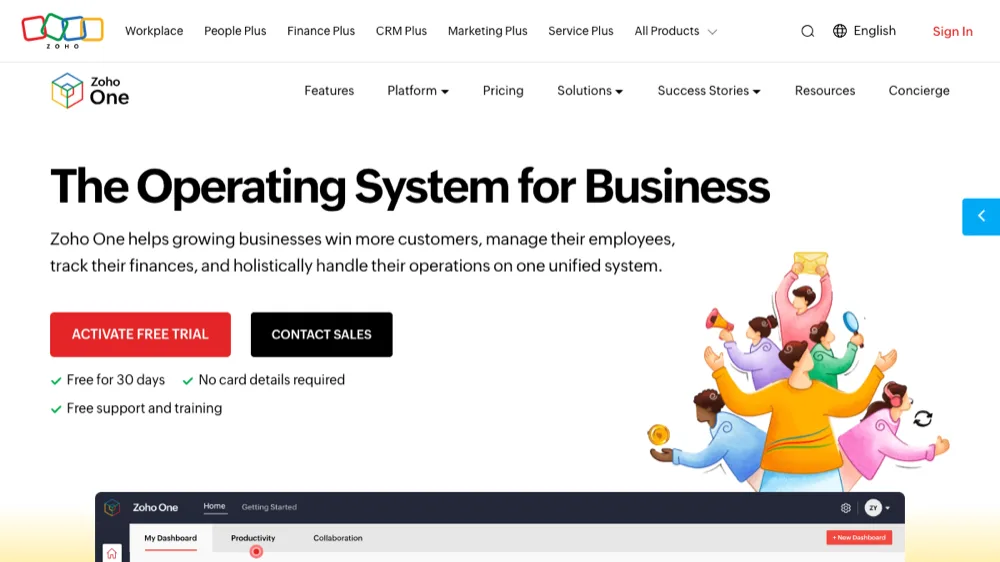
Zoho One bundles more than 45 integrated applications — CRM, Books (accounting), People (HR), Desk (support), Marketing and more — into a single per-employee subscription. It is the best value all-in-one suite for a growing SMB that wants to avoid stitching together a dozen separate tools, with a genuinely unified data model across apps. The interface is more utilitarian than some newer competitors, but the breadth is unmatched at the price.
Category: All-in-one suite. Pricing: From $37/employee/mo (all apps). Best for: SMBs that want CRM, finance, HR and marketing under one login. Try it: www.zoho.com/one
4. Monday Work Management
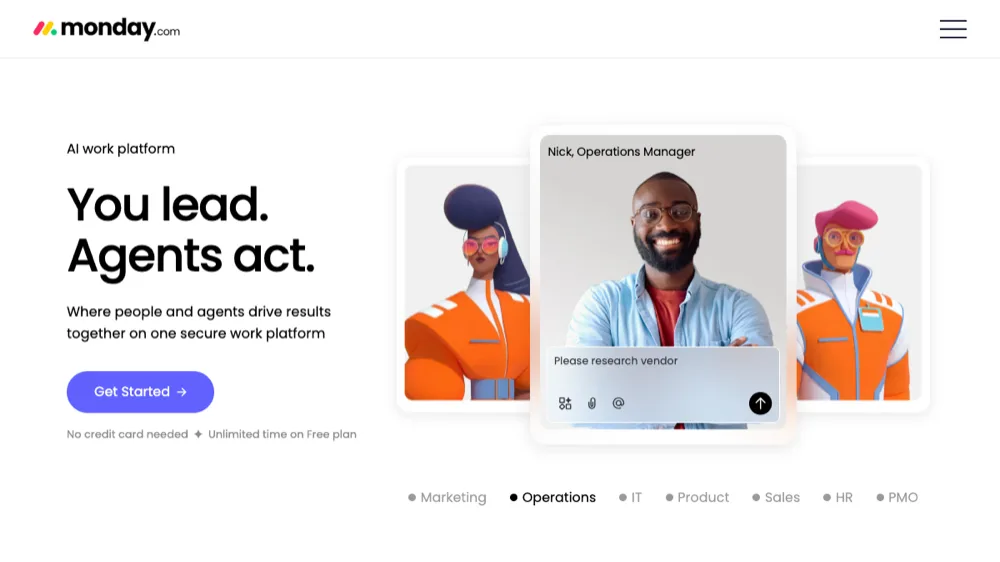
Monday.com's Work OS turns projects, CRM pipelines, and operations into colourful, fully customizable boards that non-technical teams can configure without IT help. In 2026 its AI features (auto-summarizing updates, generating status reports, suggesting automations) have become a core selling point. It is less a vertical ERP and more a flexible operations layer — ideal alongside a dedicated accounting tool rather than as a replacement for one.
Category: Work OS / project management. Pricing: Free (2 seats) / from $9/seat/mo. Best for: Teams that want a highly visual, customizable work hub. Try it: monday.com
5. ClickUp
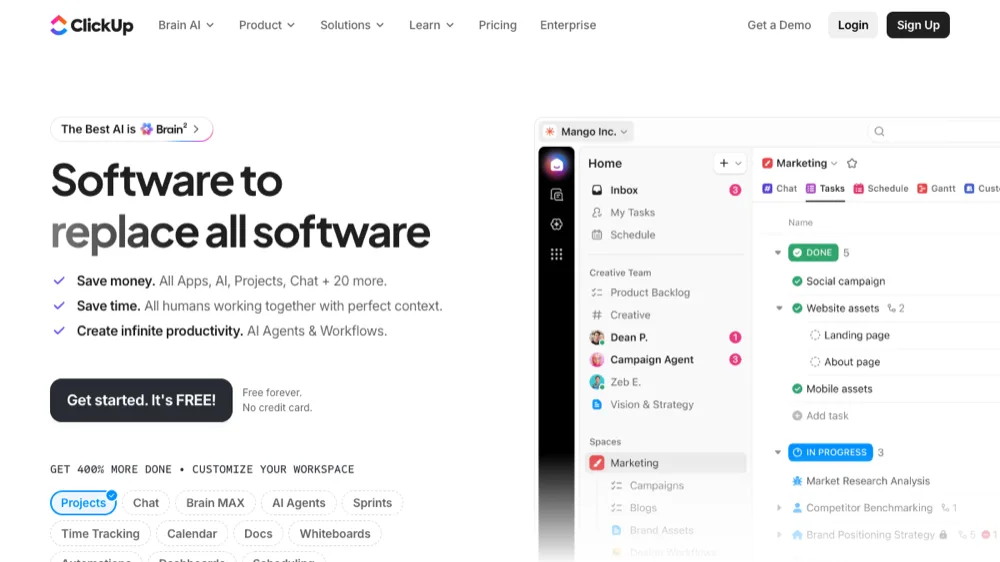
ClickUp's pitch — "one app to replace them all" — means tasks, docs, whiteboards, chat, goals, and time tracking live in a single workspace, now wrapped in AI agents that can summarize, write, and automate workflows. The free plan is one of the most generous in the category. The flexibility is a double-edged sword: new teams often need real onboarding time to avoid overwhelming their workspace with unused features.
Category: All-in-one productivity. Pricing: Free (generous) / from $7/user/mo. Best for: Startups and lean teams that want tasks, docs, chat, and goals in one app. Try it: clickup.com
6. Bitrix24
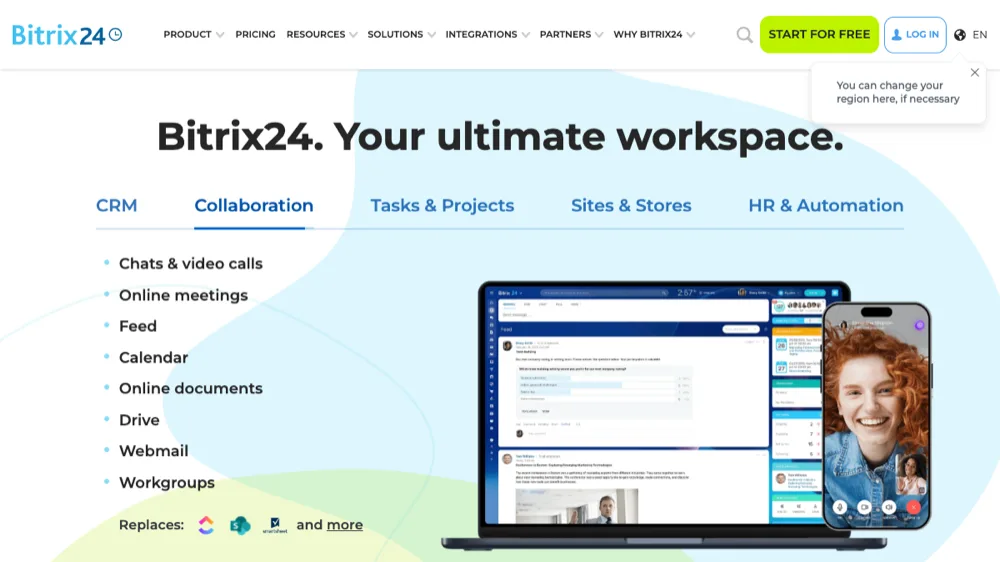
Bitrix24 packs CRM, task and project management, HR, a website builder, and full team collaboration (chat, video calls, a company intranet) into one platform — with a free tier that supports unlimited users, which is rare in this category. Pricing is per-organization rather than per-seat above the free tier, which makes it unusually cost-effective for larger teams. The interface can feel busier than newer competitors, but few tools pack in this much for free.
Category: All-in-one CRM + collaboration. Pricing: Free (unlimited users) / from $61/mo (org-wide). Best for: Small teams on a tight budget that want CRM plus collaboration. Try it: www.bitrix24.com
7. HubSpot
HubSpot started as a free CRM and has grown into a full go-to-market platform spanning marketing, sales, service, content and operations hubs, all sharing one contact database. Its free tier remains genuinely useful for small businesses, and its marketing automation and reporting are best-in-class. It is not built to run inventory, manufacturing, or deep financials — pair it with an accounting tool if that is a core need.
Category: CRM + marketing/sales/service hub. Pricing: Free CRM / from $15/seat/mo per hub. Best for: Businesses that lead with marketing, sales, and customer service. Try it: www.hubspot.com
8. Wrike
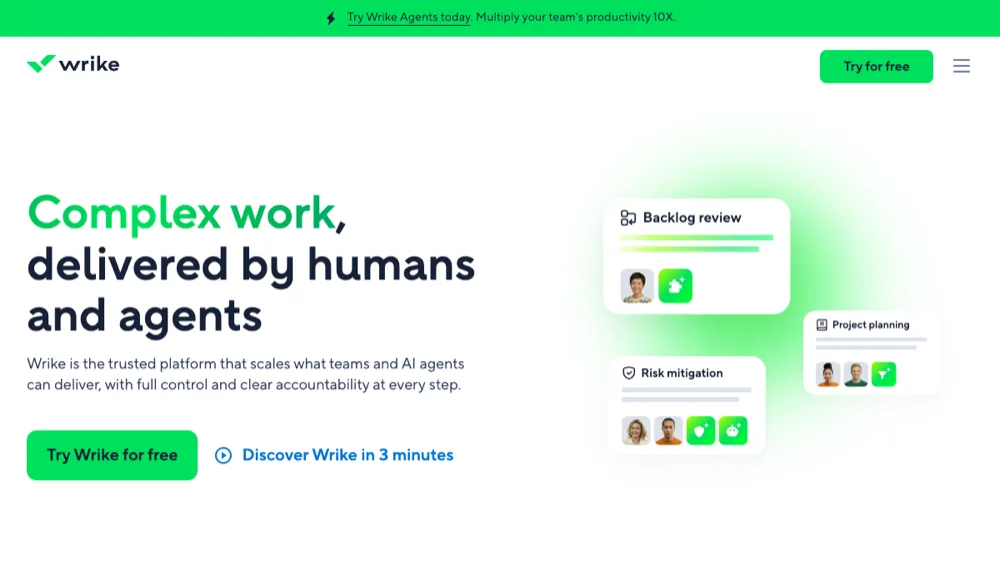
Wrike offers enterprise-grade project management — Gantt charts, resource allocation, custom workflows, and detailed reporting — wrapped in an interface built to scale from small teams to large cross-functional departments. In 2026 its AI project-risk prediction and automated status updates are the headline additions. It integrates cleanly with document tools (Google Drive, Dropbox, Box) and is a strong pick when project complexity outgrows a simple task board.
Category: Project management & collaboration. Pricing: Free / from $10/user/mo. Best for: Mid-size teams that need robust project and resource management. Try it: www.wrike.com
9. Scoro
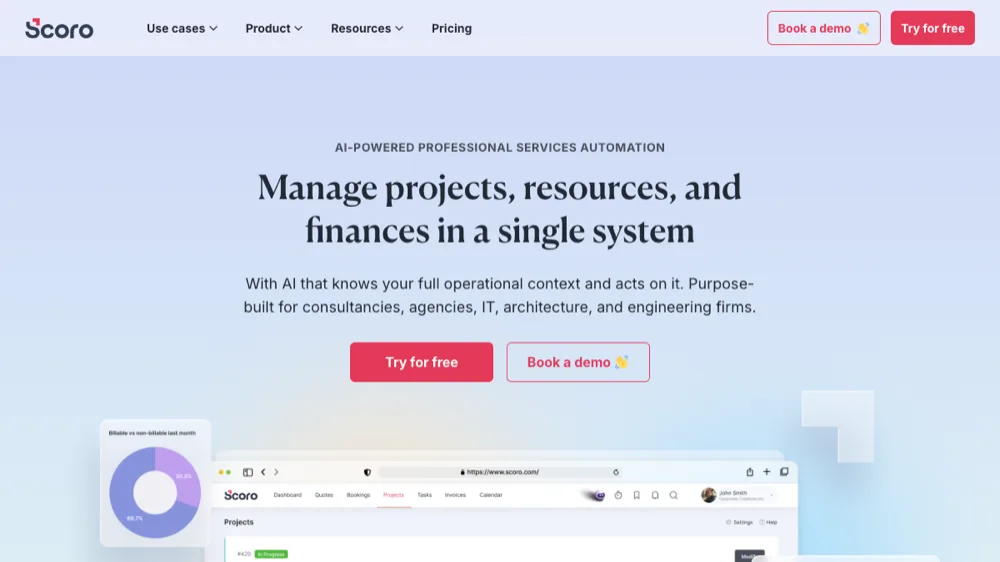
Scoro is purpose-built for agencies, consultancies and other professional-services businesses that need projects, time tracking, billing and profitability reporting to live in one system. Its standout feature is real-time profitability visibility per project, client, or team member — something generic PM tools don't offer out of the box. If your business sells billable hours rather than physical products, Scoro is worth a serious look.
Category: Professional services automation. Pricing: From $26/user/mo. Best for: Agencies and consultancies that bill by the hour or project. Try it: www.scoro.com
10. QuickBooks Online
QuickBooks Online remains the default accounting backbone for small businesses in the US — invoicing, expense tracking, payroll, tax prep, and financial reporting, with the largest ecosystem of bookkeeper and accountant familiarity of any tool here. It is not a full operations platform, but it is often the finance layer that a broader tool like Monday, ClickUp or HubSpot gets integrated with. See our full QuickBooks review for a deeper look.
Category: Accounting & finance. Pricing: From $35/mo. Best for: Small businesses whose core need is accounting and invoicing. Try it: quickbooks.intuit.com
All-in-One Suite vs. Specialized Tools: How to Choose
The core decision is whether your business benefits more from one unified platform or a set of best-in-class specialized tools. All-in-one suites like Odoo, Zoho One and Bitrix24 win on data consistency (one customer record everywhere) and total cost once you're using several modules. Specialized combinations — say, HubSpot for sales and marketing plus QuickBooks for accounting — often win on depth in each area and are easier to swap out individually as needs change.
A simple rule of thumb: if you're a solo founder or small team with straightforward needs, start with one or two focused tools. Once you have several departments that need to share customer or financial data, the case for consolidating onto a platform like Zoho One or Odoo gets much stronger. For more on avoiding overspend either way, see our guide on how to avoid overpaying for your business software.
Frequently Asked Questions
What is business management software?
Business management software is a category of tools that help run day-to-day operations — CRM, project management, accounting, HR, inventory and communication — either as a single all-in-one platform (like Odoo or Zoho One) or as a set of specialized tools that integrate with each other (like HubSpot plus QuickBooks).
What is the best all-in-one business management software in 2026?
Zoho One and Odoo are the strongest true all-in-one suites, covering CRM, finance, HR and more under one login. Bitrix24 is the best value if budget is the main constraint, since it offers a genuinely capable free tier for unlimited users.
What is the best free business management software?
Bitrix24 offers the most capable free tier (unlimited users with CRM, tasks and collaboration). ClickUp and Monday.com both have strong free plans for small teams, and HubSpot's free CRM remains one of the best free entry points for sales and marketing.
Do I need an all-in-one platform, or separate specialized tools?
It depends on complexity. A small business with simple needs often does better combining a few focused tools (say, HubSpot for CRM plus QuickBooks for accounting) than paying for a large suite's unused modules. Once operations span multiple departments with shared data needs, an all-in-one platform like Zoho One or Odoo starts to pay off.
How much does business management software cost?
Free tiers exist across most of this list (Bitrix24, ClickUp, Monday, HubSpot). Paid small-business plans typically run $7–$40 per user per month. Full ERP platforms like NetSuite are quote-based and usually start in the low tens of thousands of dollars annually, reflecting their much greater depth and implementation support.
Which business management software is best for agencies?
Scoro is purpose-built for agencies and consultancies, with project profitability, time tracking and billing in one system. Wrike and Monday.com are also strong choices if project visibility matters more than billing detail.
Conclusion
There is no single best business management software — only the best fit for your size, budget and complexity. Lean teams do well starting with a free plan on ClickUp, Monday.com or Bitrix24; agencies should look hard at Scoro; and businesses ready to consolidate everything onto one system should shortlist Zoho One or Odoo. Whichever you choose, prioritize the platform your team will actually use daily over the one with the longest feature list.
Related reading: best project management software, our Salesforce review, and why business software matters.