Google Lab Experiments: Exploring the Cutting-Edge of AI Innovation
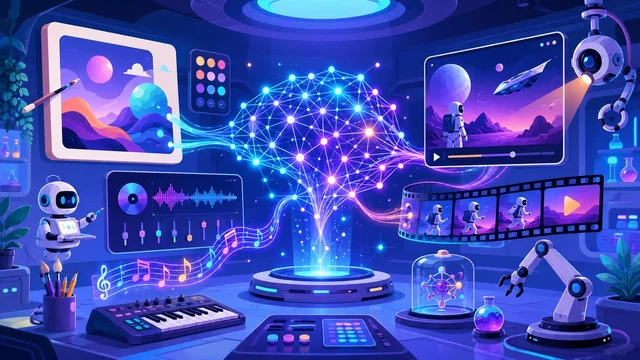
Google Lab Experiments offer a rare front-row seat to the AI tools shaping the future — Google's digital playground where its newest ideas in artificial intelligence, image and video generation, and research tools are released for anyone to try. Many of these experiments later graduate into mainstream Google products, so trying them today is a glimpse of what's coming next.
Whether you want to create images and music, generate video, or supercharge your research and writing, Google Labs has a tool for it — and most are free to use. In this guide we walk through the most exciting Google Lab experiments you can try right now, what each one does, and how to access them.
What Are Google Lab Experiments?
Google Lab Experiments are experimental projects, tools and applications that showcase the latest advances in artificial intelligence, machine learning and other emerging technologies. Through them, Google demonstrates its capabilities while inviting users to help shape the future of digital experiences. Since 2009, developers and creators have built thousands of experiments using Google technologies including Chrome, Android, AI, WebVR and AR. In late 2023, Google brought its experimental projects together under the new Google Labs platform (labs.google), creating a central hub for its latest AI experiments.
The Evolution of Google Labs
Google Labs has a long history as an incubator for experimental features and products. Though it was discontinued for a time, Google revived the Labs brand in 2021 to house AR, VR and other experimental initiatives. Today it functions as a testing ground for bold but responsible AI applications — a place where Google introduces tools, gathers feedback and refines them before potentially integrating them into mainstream products like Search, Workspace and the Gemini app.
Key Google Lab Experiments You Can Try
Here are some of the most exciting Google Lab experiments currently available:
1. Imagen & ImageFX
Imagen is Google's state-of-the-art text-to-image model. The latest generations (Imagen 4) produce strikingly detailed images with better colour, richer textures and improved text rendering, across styles from photorealism to anime. ImageFX, powered by Imagen, lets you create images from simple text prompts, with "expressive chips" that make it easy to tweak and explore variations.
2. Veo & VideoFX (Flow)
Veo is Google's cutting-edge video generation model, creating high-quality clips that match your prompt. Recent versions (Veo 3) added a major leap in realism — including native audio generation with dialogue and sound effects — plus better understanding of physics and cinematography. VideoFX (now part of Google's "Flow" filmmaking tool) puts this in your hands, generating high-resolution video from text instructions.
3. Whisk
Whisk takes a different approach to image generation: instead of relying only on text, you drag in images to define the subject, scene and style, then remix them into something new. Behind the scenes it uses Google's Gemini model to caption your images and Imagen to generate the result, capturing the essence of your inputs rather than copying them exactly.
4. MusicFX
MusicFX generates original instrumental soundtracks and loops from text prompts. You can create tunes up to about 70 seconds, explore variations with expressive chips, and download or share your creations. Millions of tracks have been made with it, and updates continue to improve audio quality and speed.
5. TextFX
Built in collaboration with GRAMMY Award-winning artist Lupe Fiasco, TextFX is a generative AI experiment for lyricists, writers and wordsmiths. It offers a suite of tools to explore language, spark ideas and break through creative blocks.
6. NotebookLM
NotebookLM reimagines note-taking with a language model at its core, acting as a research assistant that summarizes, explains and connects ideas from sources you choose. Its key strength is "grounding" the AI in your own notes and documents, and its popular Audio Overview feature turns your sources into a podcast-style discussion. It has grown so successful it's now a full Google product.
7. Project Astra
Project Astra is a research prototype exploring a truly universal AI assistant — one that understands the world around you in real time, holds free-flowing conversations and remembers key details. It can draw on Google Search, Maps and Lens, and run on Android phones or prototype glasses, seeing the world as you see it. Many of its ideas are flowing into Gemini Live.
8. Illuminate
Illuminate transforms dense content — including research papers and YouTube videos — into an engaging two-person audio discussion, with a focus on academic and scientific subjects. Like NotebookLM's audio overviews, it makes complex information far easier to absorb.
Why Google Lab Experiments Matter
These experiments are more than tech demos. They advance AI research, with models like Imagen and Veo pushing the state of the art. They democratize creativity, putting image, video and music generation in everyone's hands. They transform learning, as tools like NotebookLM and Illuminate make complex material accessible. And they drive business innovation, with direct applications in content creation, research and productivity.
How to Access Google Lab Experiments
Most experiments are available through the Google Labs website at labs.google. Availability varies by region — many launch in the United States first — and to take part you'll usually need:
- A personal Google account (not a workplace or school account)
- To be in a supported region
- Occasionally, to join a waitlist for access
Some experiments have daily usage limits or generation quotas that reset each day.
Safety and Responsible AI
Google builds safeguards into its experiments: content filters limit violent, offensive or explicit outputs; SynthID watermarking from Google DeepMind embeds an invisible marker in AI-generated images and audio so they can be identified; and extensive adversarial testing helps catch problems before release. Google is also transparent about data use, noting that in many cases experiment data isn't used to train its models.
Frequently Asked Questions
What are Google Lab Experiments?
They are experimental AI tools and projects that Google releases through its Google Labs platform (labs.google) to showcase new technology and gather feedback before features potentially roll into mainstream products like Search, Gemini and Workspace.
Are Google Lab experiments free?
Most are free to use with a personal Google account, though some have daily usage limits and availability can vary by region. A few advanced features may require a paid Google AI plan.
How do I access Google Labs?
Visit labs.google, sign in with a personal Google account, and choose an experiment. Some tools are limited to certain countries or may have a waitlist, so not every experiment is available everywhere.
What is the most popular Google Labs experiment?
NotebookLM has become one of the breakout successes, especially its Audio Overview feature that turns your documents into a podcast-style conversation. Image and video tools like ImageFX and Veo are also extremely popular.
Conclusion
Google Lab Experiments are a window into how we'll interact with technology next. For everyday users they're a chance to create, learn and explore cutting-edge AI for free; for developers and businesses they hint at powerful new applications. Whether you're generating images with Imagen, making video with Veo or organizing research with NotebookLM, there's never been a better time to dive in at labs.google. For more, see our guide to the best AI tools and our ChatGPT vs Claude vs Gemini comparison.